
Composite Veneers
Tooth-coloured bonding that reshapes teeth in a single visit.
Composite Veneers at our Clinic
Composite veneers use tooth-coloured resin, shaped onto your teeth by hand, to repair chips and reshape or brighten a smile. Most cases are done in one visit.
What a composite veneer is
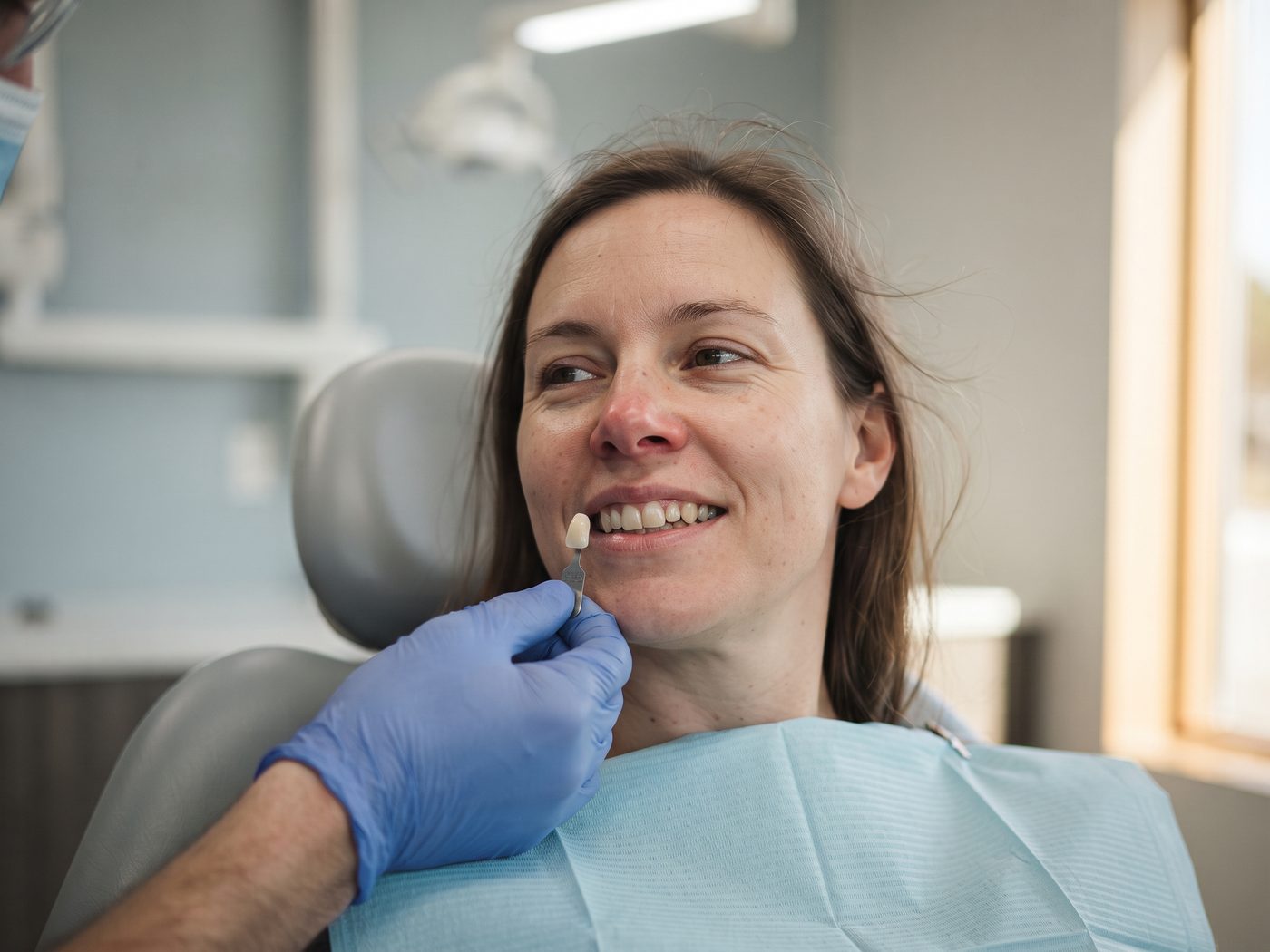
A composite veneer is a layer of tooth-coloured resin applied to the front of a tooth and shaped by hand. It's the same material used for tooth-coloured fillings. Dr. Jas Tuli builds it up on the tooth, shapes it, hardens it with a curing light, then polishes it so it catches the light the way enamel does.
The work happens in the chair rather than at a dental lab, so many cases are finished in a single appointment. The resin bonds to the surface of the tooth, which means little or no enamel usually has to come off first. You keep more of your own tooth.
What they can fix
Composite veneers change how a tooth looks. They don't fix what's wrong inside one. People usually ask about them for:
- Chipped or worn edges on the front teeth
- Teeth that look uneven or out of proportion
- Small gaps between the front teeth
- Stains that whitening hasn't lifted
- Teeth that have worn short
If a tooth is decayed, cracked through, or already heavily filled, that needs sorting out first, usually with a filling or a crown. We'll tell you before any cosmetic work starts.
How many teeth to treat
Sometimes it's one tooth. A chipped front incisor gets rebuilt, the shade is matched to the teeth on either side, and nobody can tell which one was worked on. That's the most common request we see.
Other times it makes sense to treat several across the front. If your teeth vary in colour or a couple are noticeably shorter than the rest, working on just one can draw attention to the difference instead of hiding it. Treating the front four or six together lets us even out shape and length across the whole smile line, though it costs more and takes longer in the chair.
There's no rule about it. We'll hold a mirror up, show you what treating one tooth would look like against treating a few, and let you decide. Some people come in for one chip and leave it at that. Others start with one and come back later for the rest.
Composite compared with porcelain
Both cover the front of the tooth. They're made differently, they wear differently, and they're priced differently.
Composite veneers
Shaped onto your tooth in the office, usually in one visit, and typically takes little or no enamel off. Costs less up front, and if a chip happens later it can often be patched rather than replaced. Composite resin is softer than porcelain, though, so it picks up stain over the years and the edges are more prone to chipping.
Porcelain veneers
Made at a lab and bonded on at a second visit. A thin layer of enamel comes off to make room for the shell, so that part can't be undone. Porcelain is harder than composite, holds its colour better, and tends to last longer.
We'll go through both at your consultation, including what each would mean for your teeth specifically.
What happens at your appointment
A conversation first
We look at the teeth you're unhappy with, check that the teeth and gums underneath are healthy, and talk about what you want the result to look like. We may take photos or an iTero scan to plan the shape.
On the day
The tooth is cleaned and the surface lightly prepared so the resin will grip. Freezing often isn't needed, since little or no enamel is coming off, but it's there if you'd rather have it. The resin goes on in layers, gets shaped, and is cured with a light, then trimmed and polished. We check your bite before you go, so the new edges don't catch when you close.
Afterwards
Most people head straight back into their day. Your teeth may feel a little different to your tongue for a day or two while you get used to the new shape.
Looking after them
Treat them like your own teeth, with a few extras:
- Brush twice a day and clean between your teeth daily
- Go easy on coffee, tea, red wine, and tobacco, which stain resin over time
- Don't bite your nails, chew pens, or crunch ice
- Wear a nightguard if you grind or clench, so the edges don't chip in your sleep
- Keep up with hygiene visits so the margins can be checked and polished
How long they last, and what happens if one chips
That depends on your bite, your habits, and how well they're looked after, so it varies quite a bit between people. Composite generally doesn't go the distance porcelain does, and the edges may need polishing or touching up along the way.
The upside is that composite is easy to repair. If a veneer chips, fresh resin can usually be bonded onto what's already there and reshaped in one short visit, instead of the whole thing being remade. If you notice a rough edge or a chip, book in sooner rather than later — a small repair is quicker and cheaper than waiting until more of the veneer has broken away.
Cost and coverage in Beaumont
Cost comes down to how many teeth are being treated and how much shaping each one needs. Composite is usually less expensive up front than porcelain, though it tends to need more upkeep over the years.
Cosmetic treatment is often not covered by dental insurance or the Canadian Dental Care Plan, since it counts as elective. Coverage varies between plans, so our team can check your benefits with you before you commit. We offer direct billing to most insurers and interest-free payment plans, and you'll get a written estimate before we start.
FAQs About Composite Veneers
How long do composite veneers take?
Most cases are done in one appointment, because the resin is shaped onto the tooth instead of being made at a lab. Treating several teeth takes longer than treating one. We'll give you a time estimate when we plan the work.
Do composite veneers damage your teeth?
Little or no enamel usually has to come off, so the tooth underneath stays largely intact. That's one reason some people prefer composite to porcelain, which does need enamel reduced. We'll examine the tooth first and tell you what preparation it needs, if any.
Can composite veneers be whitened?
No. Whitening works on natural enamel and won't lighten composite resin. If you're thinking about whitening, do that first, and we'll match the veneers to your new shade.
Are composite veneers reversible?
If no enamel was removed, the resin can generally be taken off and the tooth left close to how it was. If some enamel was reduced to fit the veneer, that part isn't reversible. We'll be clear about which applies to you before we start.
Do composite veneers stain?
They can, over the years, mostly from coffee, tea, red wine, and tobacco. Porcelain resists staining better. Brushing well and keeping up with hygiene visits helps keep the surface polished.
Is a composite veneer the same thing as bonding?
Same material, same technique. “Bonding” usually means repairing a small chip or gap on one tooth. “Composite veneer” means resin covering the visible surface of a tooth to change its shape or colour. The difference is how much is covered, not what it's made of.
Should I get composite or porcelain?
It depends on what you want to change, how long you want it to last, and your budget. Composite is one visit, less expensive, and takes off little or no enamel. Porcelain is harder and holds its colour better, but needs enamel removed and two appointments. Dr. Jas Tuli will go through both with you.
Book your visit to Serenity Dental
We're happy to answer questions, verify insurance, or set up your first appointment. Call us or use the form.
- Address: 5601 Magasin Ave #102, Beaumont, AB T4X 1V8
- Phone: (780) 929-4138
- Email: [email protected]
Canadian dental information
Visit the Canadian Dental Association for national oral health information and patient resources.

Talk with us about composite veneers.
Book a consultation or call (780) 929-4138 to learn more.
Book a Consultation